
About Johannesburg Park Station – History, Facts and Station Information
Johannesburg Park Station has a history stretching back to the late 19th century, when Johannesburg was a young and rapidly growing gold-rush city. Today it is the largest railway and transit hub on the African continent and one of the defining pieces of public infrastructure in South Africa.
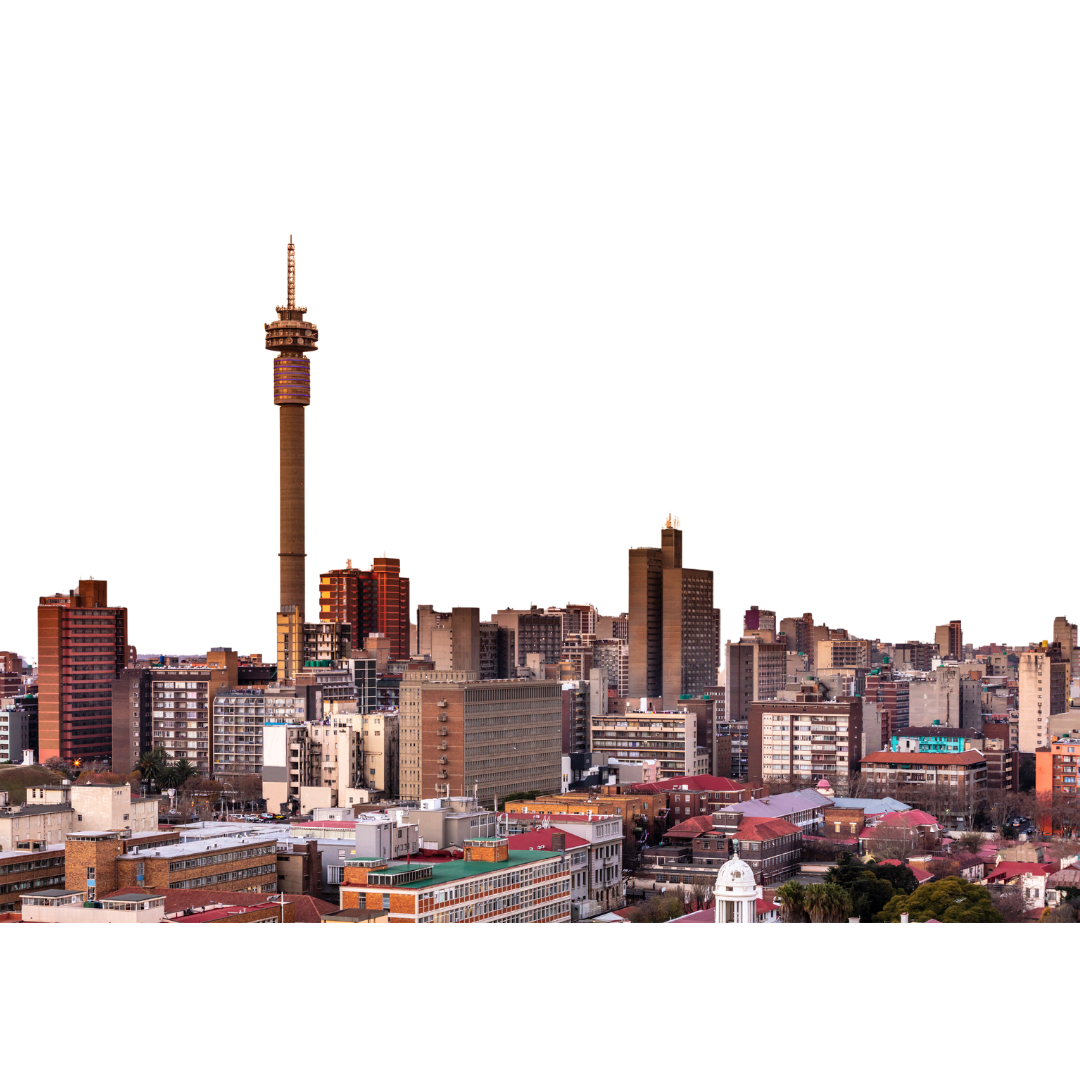
HISTORY OF JOHANNESBURG PARK STATION
The earliest Johannesburg railway station dates to 1896, when the first permanent rail facilities were established to serve the booming mining town. In those years, Johannesburg was expanding rapidly and the railways were critical to both the movement of people and the supply chains of the gold industry.
The current Park Station building was developed and evolved significantly through the 20th century. The station complex was expanded and modernised repeatedly as Johannesburg grew from a mining town into the largest metropolitan economy in Africa.
By the mid-20th century, Park Station had become the hub of South Africa’s national passenger rail network, serving thousands of passengers daily on routes that linked Johannesburg to Cape Town, Durban, Port Elizabeth and beyond.
The construction of the Gautrain rapid rail system, which opened its Johannesburg Park Station underground platform as part of the broader Gautrain rollout in the 2010s, added a new dimension to the complex and connected it to a modern rapid transit network.
The current Park Station building was developed and evolved significantly through the 20th century. The station complex was expanded and modernised repeatedly as Johannesburg grew from a mining town into the largest metropolitan economy in Africa.
By the mid-20th century, Park Station had become the hub of South Africa’s national passenger rail network, serving thousands of passengers daily on routes that linked Johannesburg to Cape Town, Durban, Port Elizabeth and beyond.
The construction of the Gautrain rapid rail system, which opened its Johannesburg Park Station underground platform as part of the broader Gautrain rollout in the 2010s, added a new dimension to the complex and connected it to a modern rapid transit network.
PARK STATION TODAY
Park Station today is operated primarily by PRASA (the Passenger Rail Agency of South Africa) and houses:
Metrorail commuter rail services for the Witwatersrand region, Shosholoza Meyl long-distance passenger rail, the underground Gautrain rapid rail station, the largest bus terminal in Southern Africa serving dozens of domestic and cross-border operators, a retail and commercial concourse with food, banking and pharmacy services, and a police station with substantial security infrastructure.
The station serves an estimated hundreds of thousands of passengers daily, making it one of the most used public transit points on the continent.
Metrorail commuter rail services for the Witwatersrand region, Shosholoza Meyl long-distance passenger rail, the underground Gautrain rapid rail station, the largest bus terminal in Southern Africa serving dozens of domestic and cross-border operators, a retail and commercial concourse with food, banking and pharmacy services, and a police station with substantial security infrastructure.
The station serves an estimated hundreds of thousands of passengers daily, making it one of the most used public transit points on the continent.
WHY IS PARK STATION CALLED PARK STATION?
The name “Park Station” derives from the Joubert Park area, one of Johannesburg’s earliest urban parks, located adjacent to the original station site. The park gave its name to the surrounding precinct and the station, which retained the name through successive rebuilds and expansions.
PARK STATION AND JOHANNESBURG'S URBAN STORY
Park Station’s location between the CBD and Braamfontein has placed it at the centre of Johannesburg’s urban evolution. For much of the 20th century, arriving in Johannesburg from elsewhere in South Africa meant arriving at Park Station. The station has been the first sight of the city for millions of South Africans moving from rural areas to the urban centre, and the last sight for countless others heading home.
Its significance in the national story of internal migration, urbanisation and economic movement cannot be overstated.
Its significance in the national story of internal migration, urbanisation and economic movement cannot be overstated.
FREQUENTLY ASKED QUESTIONS
Q: When was Johannesburg Park Station built?A: The origins of the Johannesburg railway station date to 1896. The station has been expanded and modernised significantly over the intervening 130 years. Q: Why is it called Park Station?A: The name derives from the nearby Joubert Park, one of Johannesburg's earliest urban parks, which gave its name to the surrounding precinct. Q: Who operates Park Station Johannesburg?A: PRASA (the Passenger Rail Agency of South Africa) operates the main station and Metrorail/Shosholoza Meyl services. The Gautrain section is operated by Bombela under a government concession. The bus terminal houses multiple private operators. Q: Is Park Station the biggest station in Africa?A: Yes. Johannesburg Park Station is widely recognised as the largest railway station in Africa by usage and scale. Q: How many people use Park Station daily?A: Park Station serves an estimated hundreds of thousands of passengers daily across all transport modes. Q: What has changed at Park Station in recent years?A: The addition of the underground Gautrain platform significantly modernised the precinct. Ongoing security improvements have also been implemented within the main concourse. Q: What is the Braamfontein connection to Park Station?A: Braamfontein is the urban neighbourhood directly adjacent to Park Station on the western side. Historically a mixed commercial and residential area, it has undergone urban renewal and is now one of Johannesburg's creative and student-oriented precincts. Q: Is Park Station in the Johannesburg CBD?A: Park Station is on the northern edge of the CBD, between the CBD proper and Braamfontein. It is at the boundary of the two areas. Q: What is the Shosholoza Meyl?A: Shosholoza Meyl is the PRASA-operated long-distance passenger train service running from Park Station to Cape Town, Durban, East London and Musina. The name "Shosholoza" is a Zulu/Ndebele work song historically associated with mineworkers travelling to the Johannesburg goldfields. Q: Is Park Station a heritage site?A: The Park Station precinct has historical significance in Johannesburg's urban story. Elements of the station's heritage and history have been documented by organisations including the Heritage Portal. Q: How does Park Station compare to other major African transit hubs?A: Park Station serves more modes of transport and more daily passengers than any other single transit facility in Africa, integrating rapid rail, commuter rail, long-distance rail, intercity buses, cross-border coaches, minibus taxis and BRT in one complex.